
Best Video Production Agencies for Developer Tools Companies in 2026


Key Takeaways:
- Apollo Studio: Best for launch, product and explainer video for an engineering buyer, with the people who built it on camera and AI security work on the client list
- Represent Studio: Best for dev-tool startups that want launch, tutorial and YouTube video from a team that can explain an API
- Vidico: Best for a multi-format production with the deepest infrastructure client list in the category
- Videodeck: Best for presenter-led tutorials and demos for developers every week, in ten days
- Sandwich Video: Best for the launch film that developers share
- Content Beta: Best for continuous product creative for an API company on a subscription
- Motion The Agency: Best for animated interface and feature videos at a fixed price in six working days
- Demo Duck: Best for a flagship animated explainer of an abstract platform
- Wyzowl: Best for fixed-price animated explainers with a fixed delivery date
- Testimonial Hero: Best for engineering customer stories captured remotely or on site
Search "video production for developer tools" and most of what comes back is software for video producers. This guide is the other thing: agencies that make video for companies whose customer is a developer. APIs, infrastructure, observability, data platforms, CI/CD, AI tooling, anything where the person deciding to try the product is an engineer and the person deciding to buy it is often the same engineer six weeks later.
That buyer is the hardest audience in B2B. Developers skip anything that reads as marketing, distrust a presenter who could not answer a question about the product, and will close a video the moment the interface on screen is a mock-up. They also watch an enormous amount of video: tutorials, launch demos, conference talks, comparisons, the ten-minute walkthrough that decides whether they open the docs. The difference between a video that works for developers and one that does not is not production value. It is whether the thing on screen is real and whether the person explaining it knows what they are talking about.
This guide ranks ten agencies and studios on exactly that, with verified developer-tool clients where they exist, published pricing where it exists, and a section on when a developer marketing agency is the better call than a video studio.
Why Video for Developer Tools Is Different
Three things separate this buyer from the rest of B2B, and they decide which agencies belong on this list.
The product on screen has to be real. A developer can tell a mocked-up terminal from a real one in a second, and a demo that skips the install step or the error message reads as dishonest. Agencies that work with developer tools capture the real product, real code and real output, and simplify with motion rather than replacing it with illustration.
The person on camera has to survive a question. Marketing voiceover over a screen recording is the format developers trust least. What works is the engineer who built the feature, the founder who understands the architecture, or a presenter who has actually used the tool. That is why founder-led and engineer-led video ranks above polished narration on this list.
Distribution is different. A developer tool's video lives on YouTube, in the docs, on Hacker News and Product Hunt on launch day, in the README, and in a conference talk that gets clipped. It is watched to completion far more often than a marketing video and it is searched for by name. Long-form tutorials and honest comparisons earn more than a 60-second brand piece, and they are increasingly the videos AI answers cite.
The practical consequence is that developer tools companies usually need three kinds of video: a launch or product film that makes the tool feel like a moment, a demo or explainer that makes the architecture understood, and a steady run of tutorials and walkthroughs that get developers to their first success. Few agencies are good at all three, which is why this list ranks by what each one does best.
How We Ranked These Agencies (Methodology)
We ranked for developer tools companies whose buyer is an engineer, and who need video that a developer will trust. That is a specific brief. If you sell to a CMO, if your product is a consumer app with developers as one segment, or if you need a hundred short clips a quarter, weight these criteria differently. Each entry says who should choose someone else.
Technical credibility on screen
Weighted heaviest. Whether the agency's work shows real products, real code and real people who understand them, and whether its process gets the engineer or founder in front of the camera rather than a script in front of a narrator.
Verified developer-tool work
Named clients that sell to developers, confirmed on the agency's own site with the videos attached. Where an agency's strength is technical buyers more broadly (security engineers, data teams), we say so rather than stretching the claim.
Format range
Launch films, product demos, tutorials, long-form YouTube and customer stories are different crafts. We ranked studios that cover the formats a developer tool needs, or that are unambiguous about which one they do.
Turnaround and engagement model
Developer tools ship constantly and launch on fixed dates. We favoured a stated turnaround and a model (project, plan, subscription) that matches how often the product changes.
Pricing transparency
Whether the agency publishes figures before a call. Several on this list publish rate cards; the rest publish a starting point or quote per project, and we say which.
The Best Video Agencies for Developer Tools Compared
| Agency | Best For | Pricing | Turnaround | Better Suited For… Than… |
|---|---|---|---|---|
| Apollo Studio | Launch, product and explainer video for an engineering buyer | From $10,000 | Full productions in about 3 weeks | Scoped films that have to land with a technical buyer, than weekly tutorials |
| Represent Studio | Dev-tool startups, founders on screen, tutorials and YouTube | Custom | First batch shipped fast | Launch and product academy from one team, than a rate-card purchase |
| Vidico | Multi-format production, infrastructure client list | $1,500 to $50,000 per project; plans from about $5,000 a month | 6 to 8 weeks first production | Full asset sets across channels, than one fast piece |
| Videodeck | Presenter-led tutorials and demos at cadence | From $5,000 per video; plans from $2,000 per video | Under 10 working days | Weekly developer education video, than founder-led films |
| Sandwich Video | The launch film developers share | Custom, reported six figures | Custom | Well-funded launches, than seed budgets |
| Content Beta | Continuous product creative on a subscription | $2,000 per one-off video; $3,000 a month | 1 to 2 days on subscription; 10 days one-off | Demos and ads every release, than a flagship film |
| Motion The Agency | Animated interface videos, fixed price | From $3,480 per project; $3,950 a month | 6 working days for 60 seconds | Feature animations fast, than live action |
| Demo Duck | Flagship animated platform explainer | Budget at least $16,000 (its own guidance) | 8 to 10 weeks | A hero explainer planned a quarter ahead, than monthly releases |
| Wyzowl | Fixed-price animation, fixed date | From £2,000 (about $2,700) | 4 to 6 weeks, fixed dates | Price and date certainty, than bespoke live action |
| Testimonial Hero | Engineering customer stories | $6,000 to $13,348 per package | About 45 days end to end | Customer proof at scale, than product walkthroughs |
The 10 Best Video Agencies for Developer Tools Companies in 2026
1. Apollo Studio
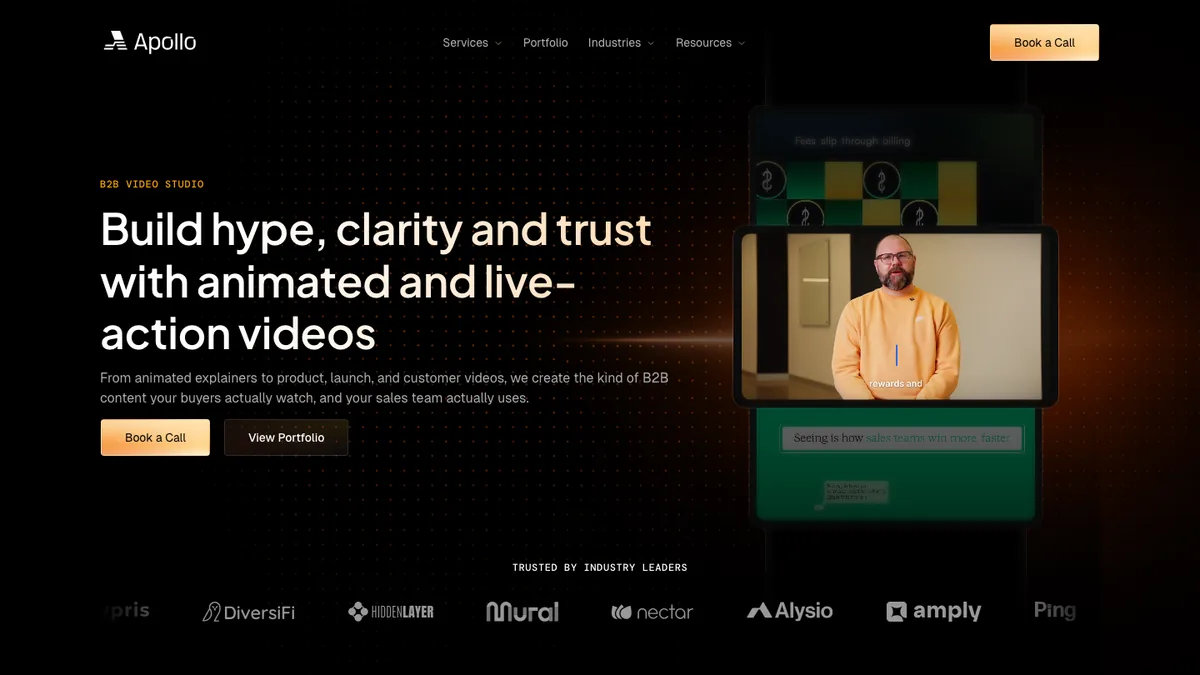
Best for: Launch, product and explainer video that has to land with an engineering buyer, with the people who built the product on camera.
Apollo Studio is a specialist studio for B2B tech (SaaS, AI, fintech, cybersecurity, healthcare) and it ranks first on the criterion this list weights heaviest. Its stated principle is real founders, customers and employees on camera rather than actors, and story before production: the architecture is explained before anything is animated. Motion design is in-house, so interface and terminal sequences are simplified by the team that wrote the script.
The client list is built around engineering buyers. HiddenLayer is the AI security platform whose model scanning, red teaming and runtime protection plug into CI/CD and MLOps pipelines, sold to the engineers who own them. Vanta, the compliance platform engineering teams integrate, took a product promo and a monthly product-update series. Anvilogic sells to detection engineers. Then product explainers for Cypris AI and Mindsmith and launch films for Ping and Arist. Post takes about a week and full productions about three, which suits a launch on a fixed date. Pricing starts at $10,000 per project, with retainers scoped per client; co-founder Cade Biegel runs strategy calls directly.
Who it's less suited for: Better suited to scoped launch, product and explainer films than to a weekly tutorial or docs-video programme. For a pure developer tool that wants tutorials and a YouTube channel after the launch, Represent Studio is the named swap.
2. Represent Studio
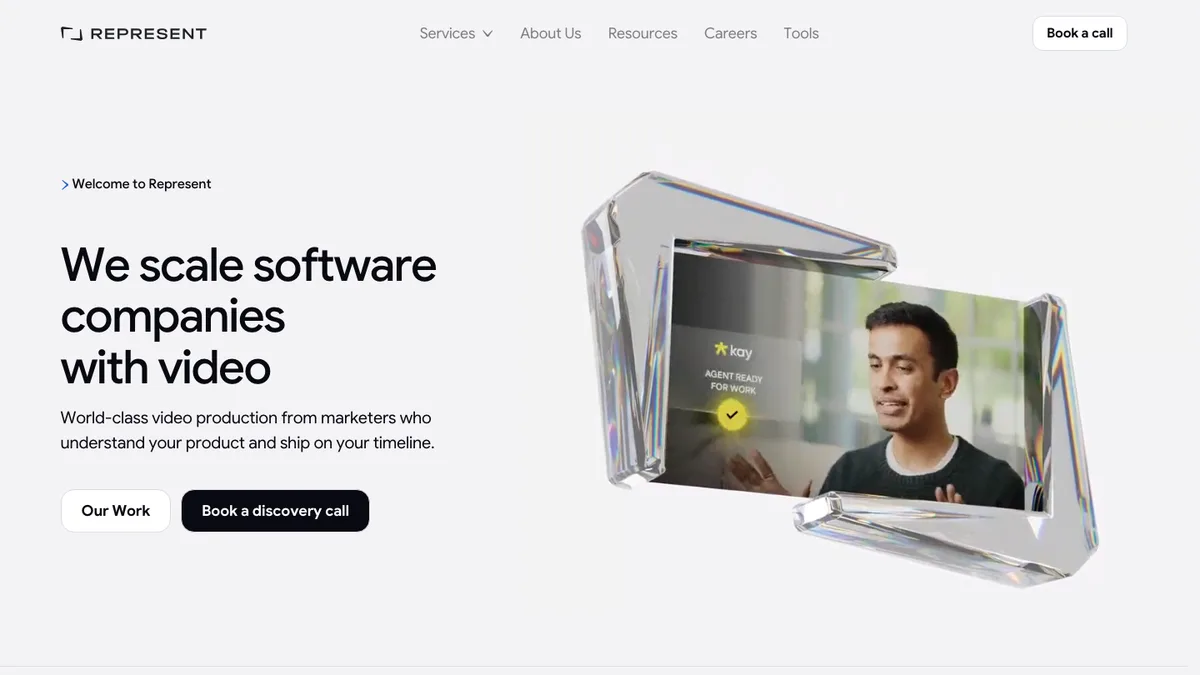
Best for: Developer-tool and AI infrastructure startups that want launch, tutorial, product academy and YouTube video from a team that can explain an API.
Represent Studio ranks second, and first for a pure developer tool that wants tutorials and a YouTube channel after the launch: its client list is the most developer-facing on this page and its whole pitch is technical fluency. The agency was founded by the former marketing lead at Bardeen, who built that product's academy, launch video and YouTube channel before turning the playbook into a studio, and its clients include E2B, ZenML, Factory AI, Dataiku, Lindy AI, Otter and FirstMark. Its own line on the difference is that plenty of camera crews exist in San Francisco and very few of them can explain an API.
The services map to a developer tool's funnel: launch videos (founder-led, motion graphics or cast commercials), tutorials and product academies that get users to their first success, customer testimonials, and long-form YouTube built to rank. It films on location in San Francisco, New York and Miami, ships a first batch of videos fast to test what resonates before scaling, and holds a 5.0 rating from 32 reviews on G2. Pricing is custom rather than a rate card.
Who it's less suited for: Better suited to startups and growth-stage developer tools that want a video partner embedded in their go-to-market than to an enterprise buyer with a formal procurement process and a fixed rate card requirement.
3. Vidico
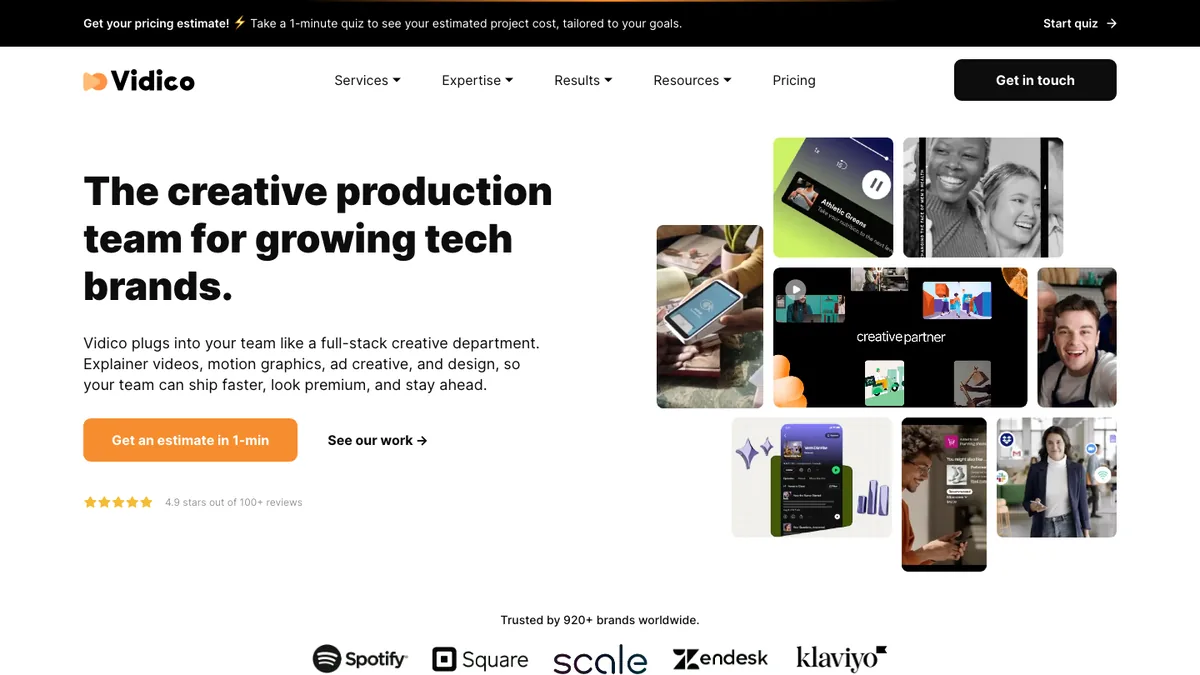
Best for: Infrastructure and platform companies that need a multi-format production with a long list of developer-facing work behind it.
Vidico has the deepest infrastructure client list on this page: case studies on its site include BrowserStack, DigitalOcean (two, including its App Platform), Linode, Plutora, mParticle, Easy Agile, ftrack and Q-CTRL, alongside Spotify, Square, Zendesk and Klaviyo. It reports more than 2,000 campaigns for 920-plus brands with a 4.9-star rating from over 100 reviews, produces animation and live action, and plans one production to yield more than 40 assets across channels with localisation in 17 languages.
For a developer tool that has to launch in several markets and placements at once, that structure is the argument. Per-project work is published at $1,500 to $50,000 on its industry pages and plans start at about $5,000 a month, set through a short quiz; first productions run six to eight weeks.
Who it's less suited for: Better suited to a planned, multi-channel production than to a company that needs one demo in three weeks or an engineer on camera every fortnight.
4. Videodeck
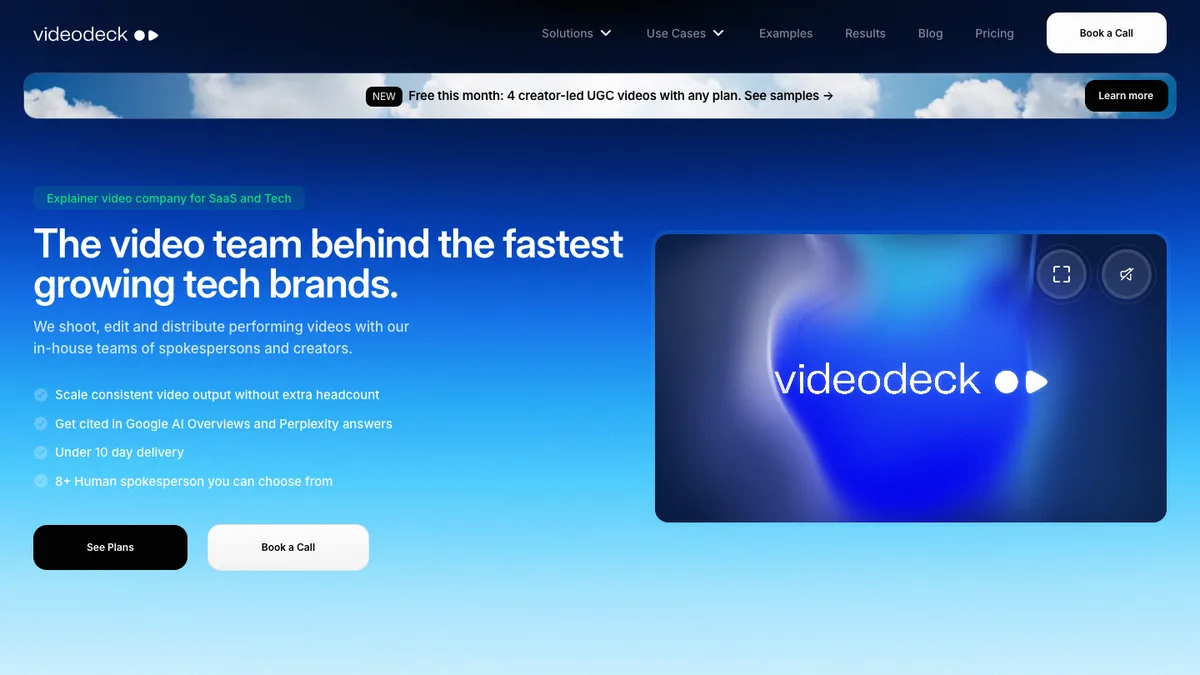
Best for: Developer tools that need presenter-led tutorials, demos and educational video every week, delivered in ten working days.
Videodeck runs a dedicated developer tools practice and is direct about the audience: developers are the toughest to win, tune out marketing fluff, and trust hands-on, technically accurate content or nothing at all. It has produced for Harness, TeleportHQ, Bright Data and CloudZero, and its results page reports 300,000-plus views on technical developer content and 150,000-plus across twenty deeply technical videos for one client. The model is a spokesperson from its in-house roster on a custom set, cut with real product screens, delivered in ten working days with unlimited revisions and full ownership.
Pricing is published in full: $5,000 for a single video, $3,000 each for ten, and monthly plans from $2,500 per video for four a month down to $2,000 for twelve, with YouTube publishing and thumbnail testing included. For a developer education channel that has to ship weekly, nothing else on this list is built as precisely for it.
Who it's less suited for: Better suited to volume and cadence with a consistent presenter than to a launch film with the founder in it or a piece that has to look unlike anything else in the category.
5. Sandwich Video
Best for: Developer tools with the budget for a launch film that developers themselves share.
Sandwich Video, founded by Adam Lisagor in Los Angeles, defined the founder-on-camera launch film, and its roster is unusually developer-facing for a brand-film studio: Postman, Descript, Gamma, Perplexity, Brex, Square, Robinhood and Instacart. The format works for this audience for a reason. A founder explaining the product with self-aware humour, in a real office, with the real tool on screen, is the opposite of a marketing video, and developers forward it.
Sandwich is selective and premium; pricing is custom and reported in the six figures, so it belongs on a Series B launch rather than a seed one.
Who it's less suited for: Better suited to a flagship launch or brand film with a real budget than to tutorials, docs videos, monthly updates or any team that needs a published price.
6. Content Beta
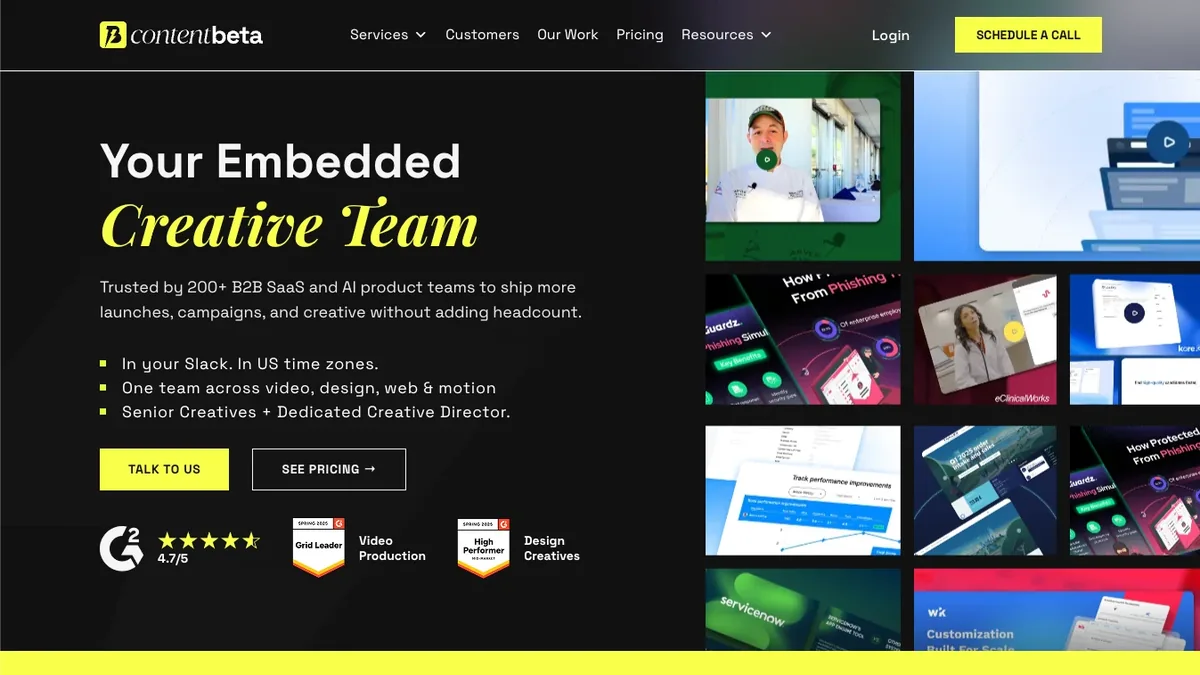
Best for: API and platform companies that ship constantly and want demos, ads and decks refreshed every release on a subscription.
Content Beta sells a creative subscription at $3,000 a month covering video, design, motion and web from one pool of rollover credits, with a dedicated creative director, a Slack workflow and most requests turned in one to two days; a one-off product video is $2,000 with a ten-day turnaround. Its client list includes Sendbird, the chat and messaging API, alongside ServiceNow and Constructor, and G2 rates it 4.7 from 86 reviews.
For a developer tool whose interface and SDK change every sprint, the subscription solves the refresh problem: updating the demo becomes a routine request rather than a procurement decision, and the same credits cover the launch ad and the docs walkthrough.
Who it's less suited for: Better suited to steady product creative at volume than to a founder-led launch film or an engineer on camera on location.
7. Motion The Agency
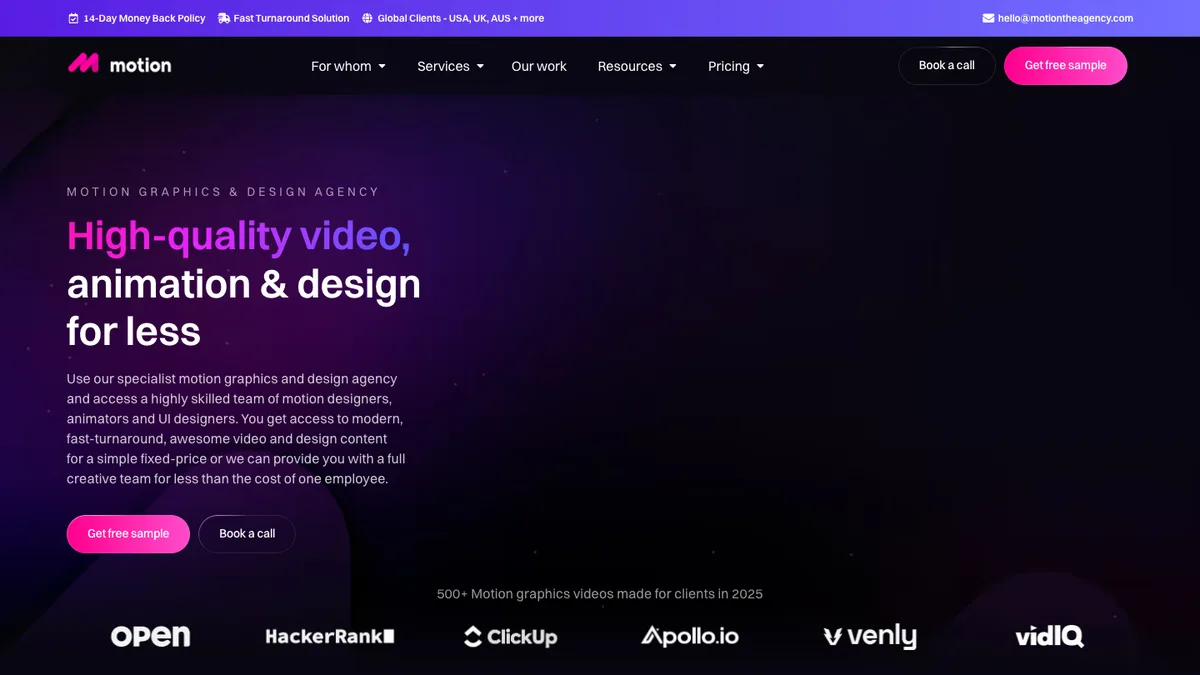
Best for: Developer tools whose news is a new screen, and who want an animated interface video at a fixed price in about a week.
Motion The Agency is a London-registered motion graphics and design studio with HackerRank, ClickUp, Attio, Bonsai and VidIQ among its clients, reporting more than 500 motion graphics videos produced in 2025. UI animation is a stated specialism, produced in After Effects, Figma and Blender, which is the toolset an IDE, dashboard or CLI walkthrough needs when the real product should be simplified rather than captured raw.
It publishes all three engagement models: fixed-price projects from $3,480 with six working days for a 60-second video, a subscription from $3,950 a month with a dedicated team, and prepaid credits from $18,000, with full commercial rights and source files on everything.
Who it's less suited for: Better suited to animated interface and feature videos than to anything with an engineer on camera, a live demo or a customer story.
8. Demo Duck
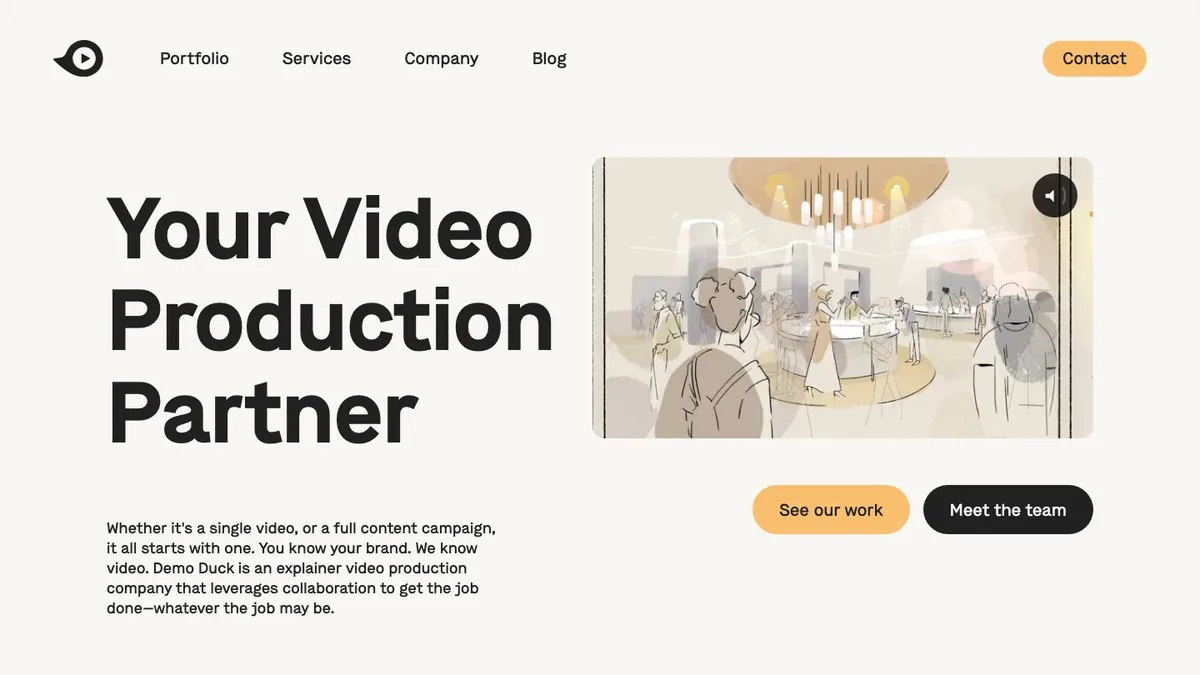
Best for: Abstract platforms, data infrastructure and anything with no interface worth showing, where the explainer has to do the architecture's job.
Demo Duck is a Chicago studio founded in 2011 with animated and live-action work for Dropbox, IBM Watson, Google, Netflix and Lenovo, and a process that runs discovery, script, storyboard, style frames and animation with the creative director involved throughout. Its own cost guide says to budget at least $16,000 for a quality explainer and its timelines run eight to ten weeks.
For a developer tool whose product is a protocol, a pipeline or a model rather than a screen, that depth of creative development is the reason to choose it: the explainer has to make the architecture understood, and that is a scripting problem before it is an animation one.
Who it's less suited for: Better suited to a hero explainer planned a quarter ahead than to a team that ships monthly and needs each release demonstrated in days.
9. Wyzowl
Best for: Teams that want a fixed price and a fixed delivery date on an animated explainer before the first call.
Wyzowl has produced more than 4,000 videos for 2,000-plus companies since 2011 and publishes its whole model: fixed price from £2,000 (about $2,700) all-inclusive, unlimited revisions at every stage, and fixed delivery dates agreed at the start. Clients include Capital One, JotForm and Mavenlink, it runs a dedicated SaaS practice, and most projects complete in four to six weeks. The work is animation: explainers, app demos, demo videos and social cuts.
For a developer tool, Wyzowl is the answer when the video is an explainer for a non-engineering stakeholder in the buying group, the budget is fixed, and the date matters more than a bespoke look.
Who it's less suited for: Better suited to fixed-price animation for a general buyer than to engineer-led demos, live tutorials or a founder on camera.
10. Testimonial Hero
Best for: Developer tools whose strongest asset is the engineering team that already uses them, captured remotely or on site anywhere.
Testimonial Hero does one thing: customer stories, more than 2,600 remote and 1,600 on site, with a producer directing every remote interview over the customer's phone and a global videographer network for on-site shoots at a flat rate. Clients include Zapier, Grammarly, Gong, LinkedIn, Reddit and Keeper, and it holds a 4.9 rating from 67 reviews on G2. Packages are published: from $6,000 remote to $13,348 on site for a full-story video with case study, sales cut and social cut, and about 45 days end to end, most of it scheduling the customer.
For developer tools, the customer story is often the highest-converting video on the site, because an engineer at a company the buyer recognises saying "we replaced X with this" does what no demo can.
Who it's less suited for: Better suited to a testimonial and case-study programme than to product demos, launches or tutorials.
Honorable Mentions
- Hackmamba: Developer marketing agency (Cloudinary, Sourcegraph, Netlify, Auth0, Appwrite, Doppler) that produces video content as part of a wider content and developer-relations programme; see the section below.
- Draft.dev: Content-powered growth marketing for developer tools and platforms, covering blogs, video, social and comparison pages for more than 100 tech companies.
- What a Story: SaaS and AI video agency with a dedicated AI product video service and a published range of $2,500 to $25,000 per asset, a fit for AI tooling launches.
- Venture Videos: SaaS launch agency with the Box AI announcement film, four-week committed delivery and a published starting price of $40,000 for launch projects.
- Umault: Boutique B2B video ad agency (Dell Technologies, SCAYLE, Matomo) for developer tools that want a commercial rather than an explainer.
Developer Marketing Agencies vs Video Studios: Which Do You Need?
Two kinds of vendor answer this search, and they are not interchangeable.
Developer marketing agencies such as Hackmamba, Draft.dev, Catchy and DevMarkLab run the programme: positioning for a technical audience, technical tutorials and guides, documentation, SEO, community and hackathons, with video as one content type among many. Hire one when the problem is that developers do not know the product exists, when there is no content engine, or when the team cannot write for engineers. Their video is usually tutorial and walkthrough content made inside that programme, and it is priced as part of a retainer rather than per film.
Video studios and agencies, which is what this list ranks, make the films: the launch, the product demo, the explainer, the customer story, the presenter-led series. Hire one when the content engine exists and what is missing is the piece that makes the product understood or the launch felt.
Most developer tools at growth stage end up with both: a developer marketing partner or in-house DevRel team producing the steady stream of tutorials and docs, and a video studio for the launch film and the hero demo. The mistake is asking either to do the other's job.
Which Video Agency Is Best for Your Developer Tool?
You have a launch, product or explainer video that has to land with an engineering buyer. Apollo Studio, with the people who built it on camera. Demo Duck if the product is abstract and the piece is a flagship animated explainer with lead time.
You are a startup launching to developers and want the founders on screen, plus tutorials after. Represent Studio.
You need a developer education channel that ships weekly. Videodeck, presenter-led in ten days; Content Beta if the mix includes ads, decks and design.
You are launching a platform in several markets and channels at once. Vidico.
The film should be the launch and developers should forward it. Sandwich Video, with the budget.
The news is a new screen. Motion The Agency, six working days, fixed price.
You want the price and the date before the call. Wyzowl, Videodeck, Content Beta or Motion The Agency, all of which publish rate cards. Apollo Studio publishes a starting point of $10,000.
Your best asset is the engineering teams already using you. Testimonial Hero.
Developers do not know you exist yet and there is no content engine. A developer marketing agency first, a video studio second.
How Much Does Video for Developer Tools Cost in 2026?
Published figures from the agencies on this list run from under $3,000 to six figures, and the spread follows format and who is on camera.
- From about $2,700: Wyzowl's published starting point (£2,000) for an animated explainer with unlimited revisions and a fixed date.
- $2,000 per one-off video, or $3,000 a month: Content Beta's published one-off and subscription pricing.
- From $3,480 per project, or $3,950 a month: Motion The Agency's fixed price for a 60-second animated piece and its subscription, with credits from $18,000.
- $3,000 to $5,000 per video: Videodeck's published one-off pricing, with monthly plans from $2,000 per video.
- $1,500 to $50,000 per project, plans from about $5,000 a month: Vidico's published ranges.
- $6,000 to $13,348 per package: Testimonial Hero's published averages, remote to on site.
- From $10,000: Apollo Studio's published starting point for project work.
- At least $16,000: Demo Duck's own guidance for a quality explainer.
- Custom: Represent Studio by quote; Sandwich Video by quote, reported in the six figures.
Factors That Influence the Price
- Who is on camera. A presenter from a roster keeps the per-video price low, which is how Videodeck publishes one. An engineer or founder on camera means a shoot, direction and more prep, and is priced per project.
- Real product versus rendered interface. Capturing the real terminal and IDE is cheaper and dates faster; rendering the interface in motion costs animation time and survives a redesign.
- Format. A 60-second launch film, a ten-minute tutorial and a two-minute customer story are three different productions, and a long tutorial is often cheaper per minute than a short film.
- Cadence. Plans and subscriptions bring the per-video cost down at volume; a project studio costs more per piece and nothing in the months you make nothing.
- Deadline. A fixed launch date close in carries a premium almost everywhere; the studios with a stated turnaround build it into the base price.
- Revisions. Wyzowl and Videodeck include unlimited revisions; most others include two or three rounds, and technical review by your own engineers is where late changes come from.
Final Thoughts
Developers reward the video that respects them: real product, real code, a person who could answer the follow-up question, and a length that matches how much there is to say. Every agency on this list makes that kind of video in its own format. Apollo Studio and Represent Studio for the scoped pieces with the builders on camera, Vidico and Videodeck for programmes at scale, Sandwich for the launch that gets forwarded, the animation studios when the product is an idea rather than a screen, and Testimonial Hero when the best argument is a customer.
Before choosing, watch one full video from each shortlist for a developer tool you have never used and ask two questions: did you understand what it does, and would you trust the person explaining it? An agency whose work passes both is the right one for this audience, whatever the price.
Related Articles
Frequently Asked Questions
The audience. Developers skip anything that reads as marketing, distrust presenters who could not answer a technical question, and close a video the moment the interface on screen is a mock-up. Video that works for them shows the real product, real code and real output, puts an engineer or founder on camera or a presenter who has used the tool, and is distributed where developers are: YouTube, the docs, Hacker News and Product Hunt on launch day, and conference talks. Long tutorials and honest comparisons often outperform a polished 60-second brand piece.
Usually three. A launch or product film that makes the tool feel like a moment on the day it ships. A demo or explainer that makes the architecture and the workflow understood before a developer opens the docs. And a steady run of tutorials, walkthroughs and feature videos that get developers to their first success and keep them there. Customer stories from engineering teams at recognisable companies are a strong fourth.
For a launch, product or explainer video that has to land with an engineering buyer, with the people who built it on camera, Apollo Studio, whose clients include HiddenLayer, Vanta and Anvilogic. For a developer-tool startup that wants launch, tutorial and YouTube video from a team that can explain an API, Represent Studio, with clients including E2B, ZenML and Factory AI. For a weekly presenter-led education channel, Videodeck, which has a dedicated developer tools practice with Harness, TeleportHQ and Bright Data. For a multi-format production with the deepest infrastructure client list, Vidico.
Published figures in 2026 run from about $2,700 (Wyzowl) through $3,480 (Motion The Agency), $5,000 (Videodeck), $6,000 (Testimonial Hero, remote) and $10,000 and up (Apollo Studio) to at least $16,000 (Demo Duck) and six figures (Sandwich Video, reported). Subscriptions start at $3,000 a month (Content Beta) and Vidico's plans at about $5,000. The biggest drivers are who is on camera, whether the interface is captured or rendered, and how often the video has to be refreshed.
For a launch or a product film, usually yes: developers trust the person who built it, and a founder who can explain the architecture is more persuasive than any narrator. For weekly tutorials, a consistent presenter who has genuinely used the tool works well and is what makes a cadence sustainable, which is Videodeck's model. The wrong choice is a narrator reading marketing copy over a screen recording.
A developer marketing agency (Hackmamba, Draft.dev, Catchy, DevMarkLab) when the problem is awareness and there is no content engine: they run positioning, tutorials, docs, SEO and community, with video as one content type. A video studio when the content engine exists and what is missing is the launch film, the hero demo or the customer story. Most growth-stage developer tools use both.
Plan for it at commissioning. Ask how a screen swap is priced, prefer animated or simplified interface treatments for the sections most likely to change, keep the real terminal and code for the sections that prove the product is real, and consider a plan or subscription (Videodeck, Content Beta, Motion The Agency) if the interface changes monthly. Insist on source files so your own team can recut.
YouTube first, because developers search there by product name and because AI answers increasingly cite it. Then the docs, the README or getting-started page, the launch post on Hacker News or Product Hunt, the homepage, and LinkedIn and X on launch day with a short cut. A tutorial belongs in the docs as well as on YouTube; a launch film belongs everywhere on the morning it ships.
As long as there is real content for. A launch film or product demo works at 60 to 120 seconds. A tutorial or walkthrough is often five to fifteen minutes and is watched to completion because the viewer is trying to do something. A customer story runs 90 to 120 seconds with a 30-second sales cut. Developers punish padding and reward density, so the test is whether every minute shows something.
For a launch film, completion rate and shares on launch day and traffic to the docs in the week after. For a demo, whether sign-ups who watched it reach their first success faster. For tutorials, watch time, search traffic by product name and a fall in the support questions the tutorial answers. The informal signal that matters most: whether developers link to it in their own posts and answers without being asked.
Explore Our Blog Posts
Discover insightful articles on cybersecurity and more.

Best Video Agencies for Developer Tools Companies (2026)
How to Choose a B2B Video Production Agency (2026 Guide)